When was the last time your child laughed out loud when reading a book? Chances are, they weren’t thinking about learning at all; yet they were. That’s the quiet magic of educational and entertaining books for kids. These books are designed so they don’t teach young minds in the most obvious way. Instead, they invite children into stories where learning happens naturally, through curiosity, imagination, and fun.
It is essential for young learners that learning and reading not be added to their routine as a burden. When books combine enjoyment with learning about morals, children feel safe to explore ideas, make mistakes, and grow at their own pace.
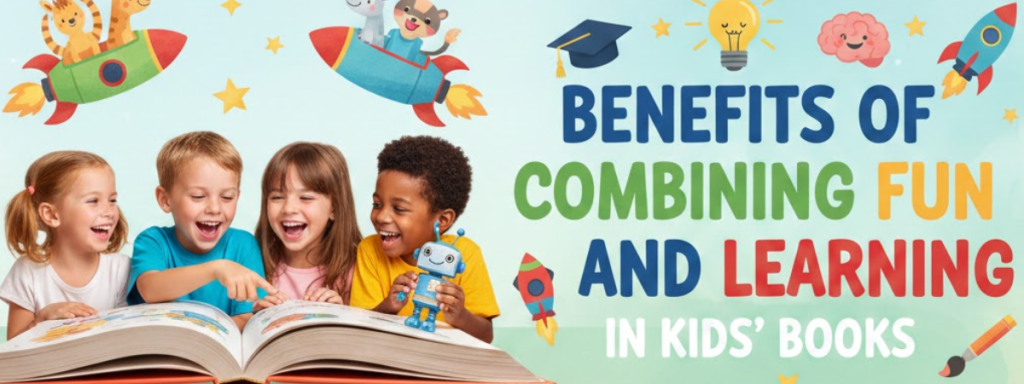
Why Fun and Learning Belong Together in Children’s Books?
Children are naturally curious and love fun. However, they have the innate ability to explore, discover, and most importantly, understand the world through their own notions. Traditional learning methods sometimes overlook this, making education feel like a task instead of an adventure. Fun learning in kids books emphasizes stories, humor, puzzles, and relatable characters to transform lessons into enjoyable experiences.
These educational and entertaining books for kids are wrapped in multiple layers of lessons that invite the readers to use their imagination, ask questions, and most importantly, stay motivated.
This is a strange combination of sparking creativity in young minds and helping them build confidence, especially when following instructions is difficult.
Here are some of the reasons why fun and learning go hand in hand for young minds.
Boosts Engagement and Attention Span:
One of the biggest benefits of fun learning books is that they can improve children’s focus. They are more likely to finish a book when it entertains them. Bright illustrations, playful storytelling, and interactive elements keep their attention longer than plain text.
Moreover, books designed to encourage participation—where children solve problems, make predictions, and turn pages to find answers—help turn passive readers into active ones. This engagement strengthens comprehension and helps children retain information more effectively.
Encourages Learning Through Fun Books:
For young minds, grasping complex information and ideas is always challenging. Learning through fun books eases this anxiety. Such books help learners decode complex ideas. This process allows the unconscious to play a role and helps learners become more aware of basic concepts in science, math, and essential human skills.
For example, a story about a curious animal can teach science basics, while a playful rhyme can introduce new vocabulary. This approach supports cognitive development while keeping the learning process light and enjoyable.
Supports Emotional and Social Development:
When it comes to developing your child’s basic skills, these books are more than just academic tools. It is more about shaping their emotional intelligence. In some of the most famous fun-based learning books, you would find the themes of friendship, kindness, empathy, and resilience. Through stories, children learn how to handle emotions, resolve conflicts, and understand different perspectives.
When kids connect with characters they read about, it helps them see that if those characters can resolve conflicts or solve problems, they can too.
Builds a Lifelong Love for Reading:
One of the scariest parts of living in a digital age is that, slowly and gradually, children are drifting away from reading. While they are more inclined towards screens, one of the greatest Benefits of Combining Fun and Learning is fostering a passion for reading. Like the saying goes, “Catch them Young,” it’s the phase of their lives where these habits could have a lifelong passion for reading and learning. Therefore, choosing the right books for your kids is the first step in shaping their personalities and building positive habits.
Makes Learning Accessible for Different Learning Styles:
Like every book is different and contains different characters. The world around us is shaped in a similar pattern. Each learner is different: some enjoy visual learning through illustrations and beautiful images, while others prefer auditory learning. Educational and entertaining books for kids cater to multiple learning styles by blending visuals, storytelling, rhythm, and interaction.
Helps Parents and Educators Teach More Effectively:
As parents, educators, and teachers, we are overwhelmed by the diversity of our learners. We are always in need of fun and educational books that make teaching easier and more enjoyable.
Instead of forcing lessons, adults can use stories as conversation starters and learning tools. Bedtime reading can deliver educational value, too.
Books that balance fun and learning encourage shared reading. This strengthens bonds between children and adults, and supports literacy development.
Final Words
In a world full of distractions, educational and entertaining books for kids offer the key advantage of connecting learning with enjoyment. By combining fun with education, these books make learning effective, nurture curiosity, and support emotional development while keeping kids engaged. The main argument is that blending fun and learning helps children naturally absorb knowledge, making them more eager readers for life.